

























What is the Day of the Dead?
Día de los Muertos, or Day of the Dead, is a Mexican holiday where families honor and remember their deceased loved ones. The holiday spans over two days, November 1st and 2nd. People who celebrate believe that the boundary between the living and the spirits fade for a short period of time each year.
How is this holiday celebrated?
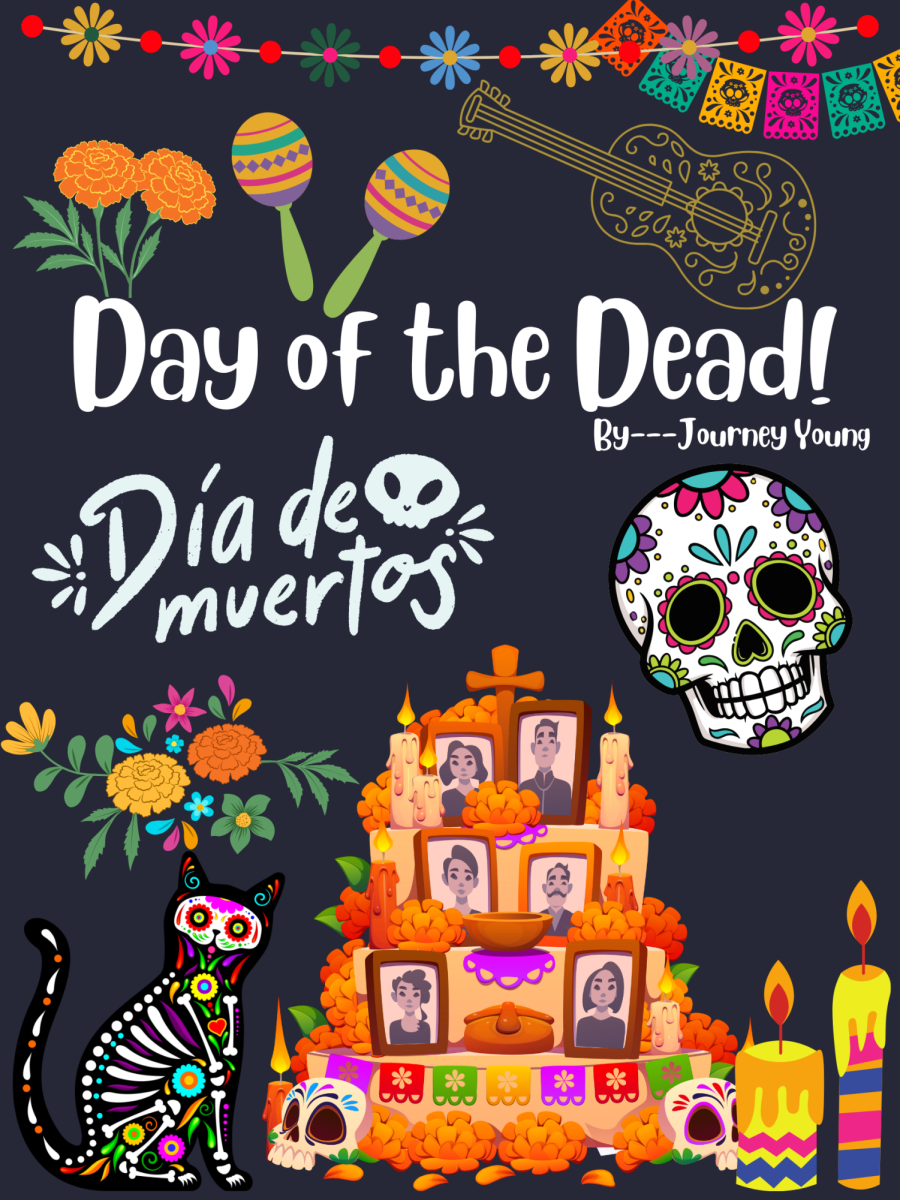
Families create ofrendas, also known as offerings, to honor their family members who have passed. These altars are decorated with bright yellow marigold flowers, photos of the deceased, and the favorite foods and drinks of the person being honored. All of the offerings are believed to encourage visits from the land of the dead. Supposedly, the dead hear the living’s prayers, smell the food, and head to the celebrations. Calaveras, or skulls, are found everywhere during Day of the Dead. The skulls are often drawn with a smile as if to laugh at death itself. They take many forms such as sugar candies, clay decorations, and the most memorable of course, face painting. Flor de Muerto, or flower of the dead, is the marigold. Marigolds are believed to be the pathways that guide the spirits to their ofrendas. Their vibrant colors and scent attract the souls, as they return to eat the food that was prepared.
The Ofrenda
While the most recognizable aspects of Day of the Dead are the representations of skulls and skeletons, the tradition that holds the most meaning is the Ofrenda. The Ofrenda is what the whole celebration is about; it’s a collection of offerings dedicated to the person being honored. A brightly colored oilcloth covers the table and on top of that sits a collection of photographs and personal items of the departed person. The lower part of the altar is where the offerings are placed, like the food and the other things that honor the person.
The 5 most popular traditions
Dia de los Angelitos
In Mexico, the first Day of the Dead, also known as the Day of Nuestros Angelitos, or little angels, refers to the dead children whose passed on spirits are the first to arrive before the adults do a day later to visit us since children like to run and are energetic.
The Ofrendas
The altars are common at the cemetery right over where the deceased lay. After all, the purpose of the Day of the Dead is to honor family members who have passed and for them to use this opportunity to ask them for their guidance by appealing to their good nature with offerings.
Festivals!
For a more small town setting, the town of San Miguel de Allende is an old favorite because of its festival, La Calaca. It lasts four days and is organized to promote ancient traditions through celebration. On the Day of the Dead, there’s a parade where most people in attendance, be they from the town or are just visiting, are dressed up to enjoy the mixture of catholic and pre-hispanic culture.
Papel Picado
Papel picado is the flag that’s associated with the occasion and, especially at night time, really lights up a room or a whole street. Although you may not be familiar with the name, you’ve surely come across them at a Mexican restaurant or during Mexican festivities that have taken place in the fall. It’s fine color paper that has an image, or a series of images, that are associated with the Day of the Dead.
La Catrina
One of the most symbolic characters to represent this holiday is La Catrina, a skeletal lady that was created by Jose Guadalupe Posada in order to bring elegance to the celebration.
An extra date?
As said previously, the two dates that are celebrated for the Day of the Dead are November 1st and 2nd. However, there’s an extra date that most people don’t mention even though it’s celebrated. October 27th is the date for deceased pets to revisit the living. People set up altars, just like for humans, but with toys and treats to welcome them home. This tradition honors the love and companionship pets provide, believing their souls visit during this specific day, which is a part of the larger multi-day celebration of Día de los Muertos
A quick history lesson
The roots of the Day of the Dead, celebrated in contemporary Mexico and among those of Mexican heritage in the United States and around the world, go back some 3,000 years, to the rituals honoring the dead in pre-Columbian Mesoamerica. Upon dying, a person was believed to travel to Chicunamictlán, the Land of the Dead. Only after getting through nine challenging levels, a journey of several years, could the person’s soul finally reach Mictlán, the final resting place. In Nahua rituals honoring the dead, traditionally held in August, family members provided food, water and tools to aid the deceased in this difficult journey. In Medieval Spain, people would bring wine and pan de ánimas (spirit bread) to the graves of their loved ones on All Souls Day (November 2nd).

Jada morgan • Nov 21, 2025 at 9:46 am
My fish died, I saw its spirits .